Universitario · En inglés
The Descent of Man and Selection in Relation to Sex
Charles Darwin
IndyPublish.com, 2003
Libros
Donna Hart y Robert W. Sussman · Westview Press, 2009
"Man the Hunted argues that primates, including the earliest members of the human family, have evolved as the prey of any number of predators, including wild cats and dogs, hyenas, snakes, crocodiles, and even birds. The authors' own studies of predators on monkeys and apes are supplemented here with the observations of naturalists in the field, and with revealing interpretations of the fossil record. Eyewitness accounts of the "man the hunted" drama being played out even now give vivid evidence of its prehistoric significance." "This provocative view of human evolution suggests that the countless adaptations, from larger brains to speech, that have allowed our species to survive stem from a considerably more vulnerable position on the food chain than we might like to imagine.
The myth of early humans as fearless hunters dominating the earth obscures our origins as just one of many species that had to be cautious, had to depend on other group members, had to communicate danger, and had to come to terms with being merely one cog in the complex cycle of life."--Jacket.
Universitario · En inglés
Charles Darwin
IndyPublish.com, 2003
Divulgación · En inglés
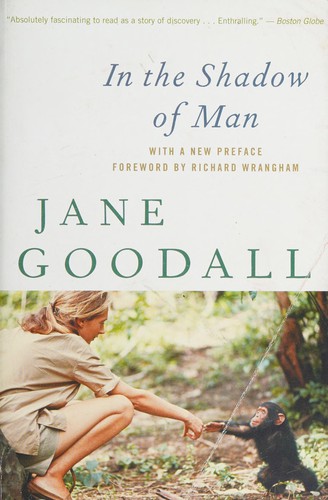
Jane Goodall
Houghton Mifflin Harcourt, 2009
Goodall's classic account of primate behavior combines a landmark scientific study with a fascinating adventure story of a determined young woman's struggle in remote Africa to approach primates in the wild as no one had ever done before.
Divulgación
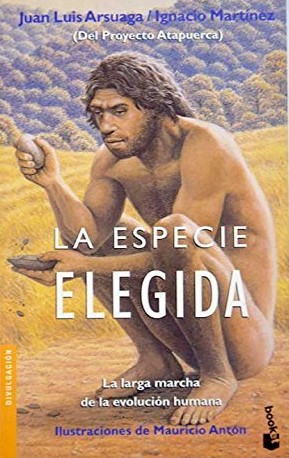
Juan Luis Arsuaga, Ignacio Martínez
Temas de Hoy, 2001
"Is modern man the logical conclusion of a long evolutionary journey? Or are humans merely an evolutionary accident? The Chosen Species answers these and many other questions about our origins."--Jacket.
Divulgación · En inglés
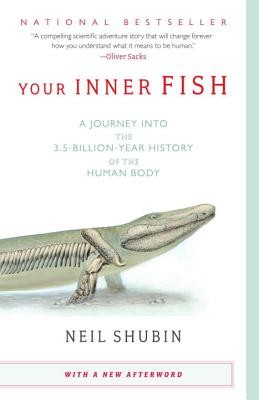
Neil Shubin
Vintage Books, 2009
Why do we look the way we do? What does the human hand have in common with the wing of a fly? Are breasts, sweat glands, and scales connected in some way? To better understand the inner workings of our bodies and to trace the origins of many of today's most common diseases, we have to turn to unexpected sources:…
Divulgación · En inglés
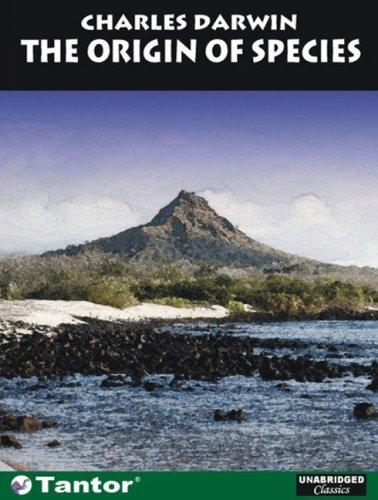
Charles Darwin
Tantor Media, 2006
On December 27, 1831, the young naturalist Charles Darwin left Plymouth Harbor aboard the HMS Beagle. For the next five years, he conducted research on plants and animals from around the globe, amassing a body of evidence that would culminate in one of the greatest discoveries in the history of mankind-the theory of…
Divulgación
Jonathan Miller
El Ateneo, 1998
Progress in genetics today would not have been possible without Darwin's revolution, but the mysterious man who undermined belief in God's creation was remarkably timid. He spent most of his life in seclusion, a semi-invalid riddled with doubts, fearing the controversy his theories might unleash. In this book, the…