Libros

Las Fuentes De La Vida

Isaac Asimov · Editorial Limusa S.A. De C.V., 2002

Cubierta de «Las Fuentes De La Vida»
Autoría
Isaac Asimov
Edición
Editorial Limusa S.A. De C.V., 2002
Nivel
Divulgación
Idioma
Español
ISBN
9789681803223

This is the middle of a set of three biochemistry books Asimov wrote in the 1950’s and 1960’s which form a progressive examination of the field. The Wellsprings of Life is divided into four sections.

The first is a general overview of life and its possible origins. Asimov spends a fair amount of time discussing the history of the struggles within biology and geology which lead to the modern world-view centered on Darwinian evolution, including a literal interpretation of the early chapters of Genesis, the issue of spontaneous generation, and the development of evolution by natural selection by Darwin and Wallace. Himself an ardent Darwinist, Asimov pulls no punches over his feelings regarding a literal reading of Genesis being used as the basis for thinking about the origin of life on earth, although he is sensitive to avoid dismissing the Bible’s religious value. The religious issues are, nonetheless, at the core of the first section, as generation after generation of scientist has to struggle against religious opposition to scientific progress, and Asimov tells this story well and with dramatic flair. (Some of his favorite stories about the history of science and the ideal ethics of the scientist are from this period of the history of biology: Darwin and Wallace, and the rediscovery of Mendel’s work.)

Seguir leyendo

The second section is a general overview of the organization of life on the planet into phyla, subphyla, and so on, and a brief overview of cytology. The third then delves into the molecule and covers basic biochemistry, focusing on proteins, enzymes, and the DNA that makes them. The book ends with a chapter on the modern spontaneous generation and how science currently feels life on the Earth may have originated.

This is, in fact, an excellent volume which manages to cover a broad amount of material in a fairly short space. Each section is thorough, straightforward, and simple to understand, and the sections are interwoven well to create a coherent, logical whol

Algunos enlaces son de afiliación: si compras a través de ellos, podemos recibir una pequeña comisión sin que te cueste más. Gracias por apoyar el sitio.


Libros cercanos

Divulgación · En inglés

Life ascending

Nick Lane

Norton, 2010

Draws on cutting-edge scientific findings to chronicle the history of biological life, exploring a wide range of clues from gene sequences to the atomic structures of proteins to identify 10 key evolutionary developments that enabled consciousness, the creation of DNA and other building blocks. Reprint. A Scientific…

Universitario · En inglés

The Origin and Early Evolution of Life

Tom Fenchel

Oxford University Press, USA, 2003

Origin and Early Evolution of Life draws on evidence from molecular genetics, the structure and function of extant organisms, and geology. It covers the period from about 4 billion years ago, when life is thought to have originated, to about 600 million years ago when multicellular organisms first arose. There are…

Divulgación

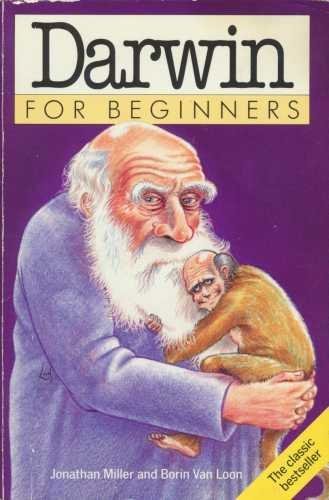
Darwin (Beginners)

Jonathan Miller

El Ateneo, 1998

Progress in genetics today would not have been possible without Darwin's revolution, but the mysterious man who undermined belief in God's creation was remarkably timid. He spent most of his life in seclusion, a semi-invalid riddled with doubts, fearing the controversy his theories might unleash. In this book, the…

Divulgación

El capellan del Diablo

Richard Dawkins

Gedisa Editorial, 2005

«¿Qué libro escribiría un capellán del diablo sobre el trabajo torpe, derrochador, primitivo y horriblemente cruel de la naturaleza?», se preguntaba Darwin en 1856. Conocer de cerca los procesos naturales y las conductas de seres vivos puede ponernos la piel de gallina o dejarnos maravillados. ¿Dónde ubicar nuestra…

Universitario · En inglés

Epigenetic Processes and Evolution of Life

Jana Svorcová, Anton Markos

Taylor & Francis Group, 2019

The book covers the possible story of emergence of life and its subsequent evolution, emphasizing the necessary evolutionary step negotiation of a common "language set" which kept all inhabitants in the biosphere together, ensuring a basic level of understanding among them. The book focuses on "protocols of…

Universitario · En inglés

Evolutionary Pathways in Nature

John C. Avise

Cambridge University Press, 2006

Reconstructing phylogenetic trees from DNA sequences has become a popular exercise in many branches of biology, and here the well-known geneticist John Avise explains why. Molecular phylogenies provide a genealogical backdrop for interpreting the evolutionary histories of many other types of biological traits…